The Five-Acre Rule in Sewickley Heights Is Older Than Its Own Zoning Code
September 24, 2026
September 24, 2026
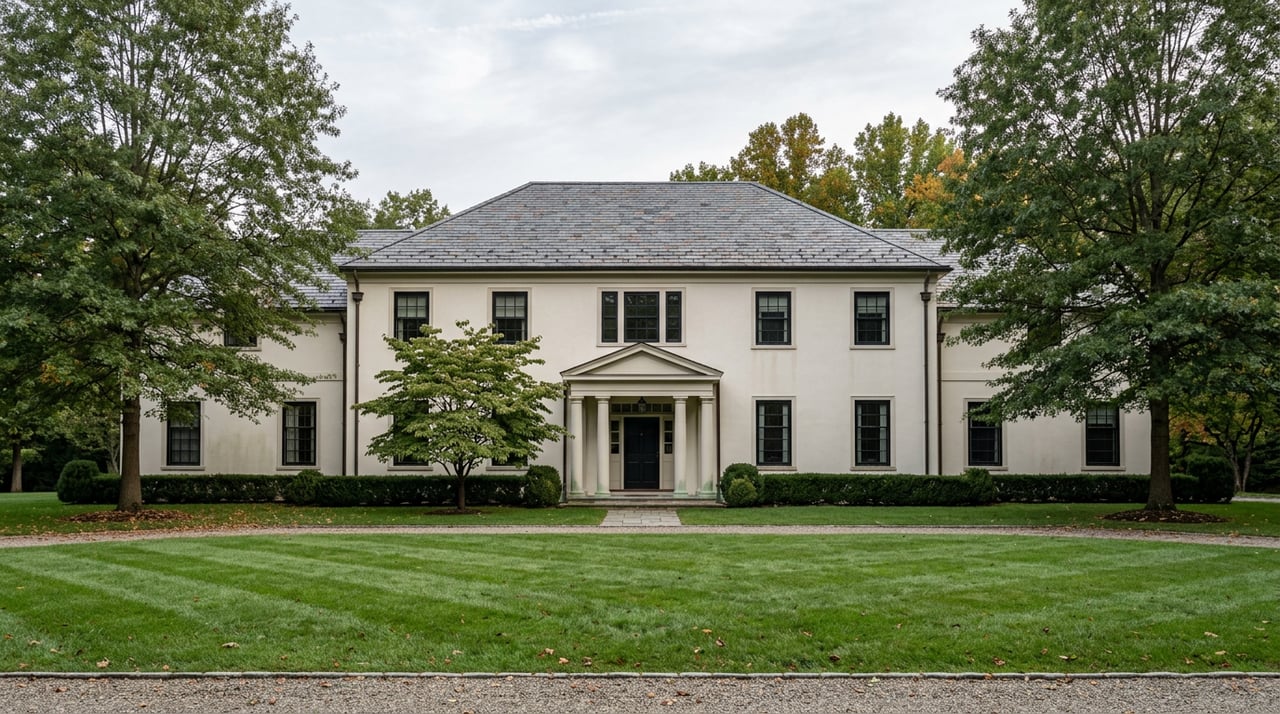
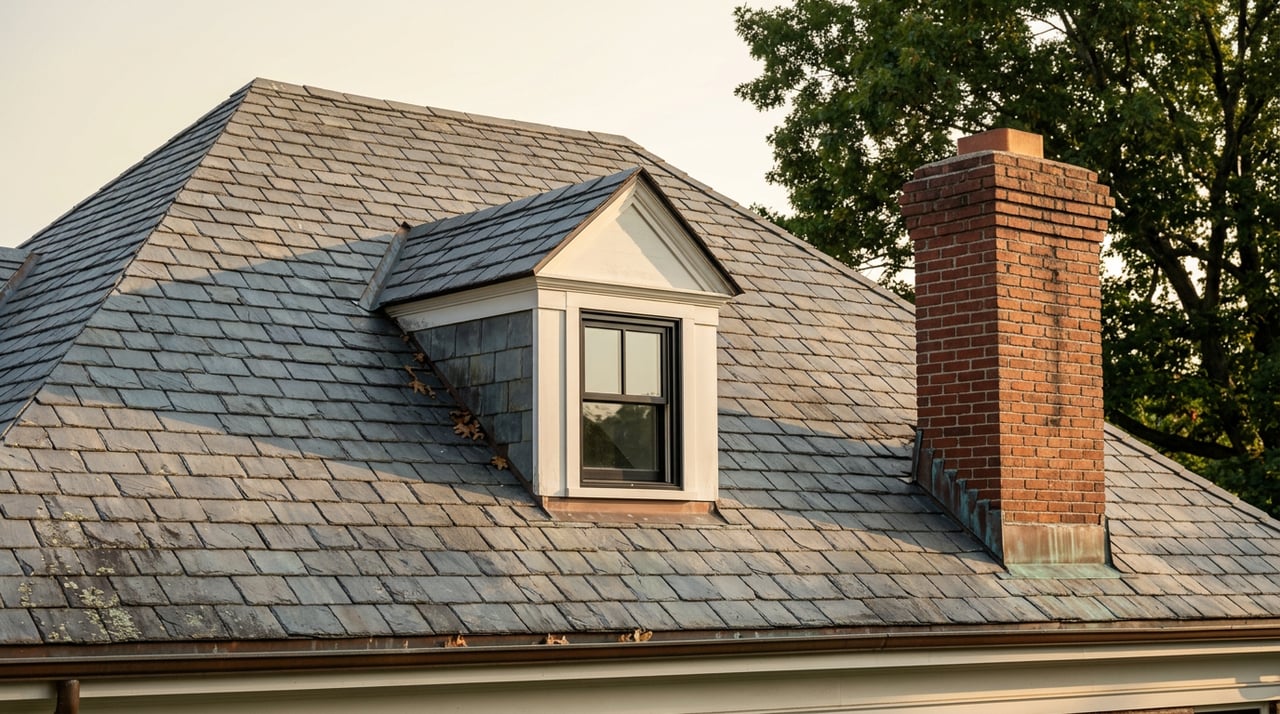
Melissa and Bill Marks had been looking for a historic property for a decade when a listing for 526 Scaife Road landed in their inbox. They didn't even go inside on the first visit. They walked the grounds, past the walled garden and stone terraces, and knew the house itself was in trouble. The 1903 summer home, built for copper heiress Clara Hussey and known as Overholm, had aluminum siding over its original details, an overgrown yard, and a porch that was falling apart. "It was nearly a teardown," Melissa told Pittsburgh Magazine earlier this year.
In most Pittsburgh suburbs, a house in that condition on a prime lot near a country club gets torn down. A builder buys it, clears it, and puts up two or three homes where one used to stand, or one much larger one. That's the ordinary economics of an aging estate on valuable land.
That almost never happens in Sewickley Heights. The Marks family restored Overholm instead of replacing it, and the property is now listed at $3.75 million through Sotheby's agents. The reason a rebuild-and-subdivide play wasn't the obvious move here isn't really about zoning, at least not only. It's about something older than the zoning code.
Sewickley Heights incorporated as its own borough in November 1935, largely because residents were alarmed at how quickly the great estates around them were changing hands. The area's zoning ordinance, still referenced today as Ordinance No. 294, traces its origin to that same month, November 4, 1935, according to the borough's own zoning ordinance section cited in a 2021 Commonwealth Court opinion. But the borough's founders didn't rely on zoning alone. Around the same time, landowners themselves signed what the Allegheny Land Trust's history of the borough calls a Land Compact and Declaration of Restrictions, a private agreement among the property owners of the old Tuxedo Land Company holdings that created the five-acre residential lot minimum still in effect today.
That distinction matters more than it sounds. A zoning ordinance is a decision the borough council can eventually revisit. A compact signed by the landowners themselves is a different kind of commitment. Ninety years later, Sewickley Heights is still built almost entirely on multi-acre parcels, even though the surrounding region has densified considerably since 1935 and even though the borough's own grand estates went through a rough patch. Many of the original mansions fell into disrepair in the 1950s and 1960s, and some were demolished and their land subdivided. The five-acre floor is part of why that erosion stopped rather than accelerated.
Buyers comparing Sewickley listings often run into a number that doesn't make sense at first: Sewickley Heights homes reportedly lost a third of their value between one 12-month window and the next, based on portal data pulled in May 2026. Read that number as a signal of neighborhood decline and you'd be making a mistake.
The Heights is a tiny, thin market. At the time that figure was published, only 14 homes were for sale in the entire borough, ranging from $1.1 million to $5.95 million. A market that small doesn't produce a stable median. It produces whatever the mix of closed sales happened to be that quarter. Two estate sales at $4 million pull the number one direction. Three renovated farmhouses in the $1.2 million range pull it the other. Neither swing tells you anything about whether values are actually rising or falling. It tells you how few transactions it takes to move a number that sounds authoritative.
Days on market is a more honest signal here, and it tells a different story than price. Homes in Sewickley Heights spent an average of 73 days on the market as of that same reporting period, compared to a market in the mid-30s for in-town single-family homes in Sewickley borough proper during the first quarter of 2026, where the median list price ran closer to $695,000 against the Heights' typical range of roughly $900,000 to $4 million or more. That gap in days on market isn't a sign of weak demand for Heights properties. It reflects what buying at that level actually looks like: fewer comparable sales, more time spent on private wells, septic systems, and estate-specific due diligence, and buyers who are willing to wait for the right combination of acreage, architecture, and access rather than the first thing that fits their budget.
If you're comparing a Sewickley Village listing to a Sewickley Heights listing on price alone, you're comparing two different kinds of patience, not just two different kinds of house.
Here's where it gets more interesting for anyone assuming Sewickley Heights is permanently frozen in its current form. The borough's engineering firm at one point estimated that around 92 new five-acre home sites could theoretically still be created from existing large parcels. A separate analysis conducted for the Allegheny Land Trust's Sewickley Heights Vision Plan put the number as high as 271, nearly three times higher.
Both studies were working from the same five-acre floor. The gap between them comes down to how each treated slope, road access, and septic feasibility, none of which show up on a zoning map but all of which determine whether a given parcel can actually support a new home. The Vision Plan's own authors noted their analysis wasn't a site-specific study of those physical constraints. It was closer to simple division: take the buildable acreage, divide by five.
The practical takeaway for a buyer is not that Sewickley Heights is about to fill in. It's that "fully built out" oversells how settled the borough's footprint really is. Somewhere between 92 and 271 additional home sites exist on paper, even under the strictest version of the five-acre rule. What keeps that number theoretical rather than active is the same combination of terrain, infrastructure, and landowner intent that has held for ninety years. That's a more durable protection than a zoning line by itself, but it isn't an absolute one, and it's worth understanding before you assume the view from your future backyard can never change.
In 2025, that board issued 28 Certificates of Appropriateness for projects ranging from roof replacement to new home construction, according to the borough's own year-end report.
That's real activity in a borough of fewer than 900 residents. The borough also offers a Pattern Book. It's described on the borough's own site as a guide meant for citizens, landowners, builders, developers, and real estate agents alike, intended to complement the zoning ordinance rather than duplicate it.
A few things worth settling before you write an offer in either market:
Is the five-acre minimum in Sewickley Heights the same as a homeowners association rule? Not exactly. It functions alongside the borough's zoning ordinance, but its roots trace to a private land compact signed by landowners around the time the borough incorporated in 1935, which is part of why it has proven more durable than a typical zoning restriction.
Could a large parcel in Sewickley Heights ever be subdivided? Two separate studies have estimated remaining capacity for new five-acre lots at anywhere from roughly 92 to 271, so the theoretical potential exists. Whether any specific parcel could support that in practice depends on slope, access, and septic feasibility that a zoning map alone won't tell you.
Does every renovation in Sewickley Heights require historic review? The borough's Pattern Book is designed as a reference for owners and agents before planning changes. Confirm your specific parcel's zoning designation and review requirements with the borough before finalizing renovation plans.
If you're weighing a move between Sewickley's historic downtown and the wooded privacy of the Heights, the numbers alone won't tell you which fits your timeline, your renovation plans, or your patience for a niche, low-volume market. Jennifer Mance has spent nearly two decades working this exact corridor and can walk you through what a given parcel's zoning, compact history, and review requirements actually mean for your plans. Schedule a free consultation or request a home valuation to start the conversation.
This article is general information, not legal, tax or financial advice. Consult a qualified professional about your situation.
Stay up to date on the latest real estate trends.
Jennifer Mance is dedicated to helping you find your dream home and assisting with any selling needs you may have. Contact Jennifer today for a free consultation for buying, selling, renting, or investing in Pittsburgh.