The Repair Sewickley's Historic District Rules Never Touch
September 17, 2026
September 17, 2026
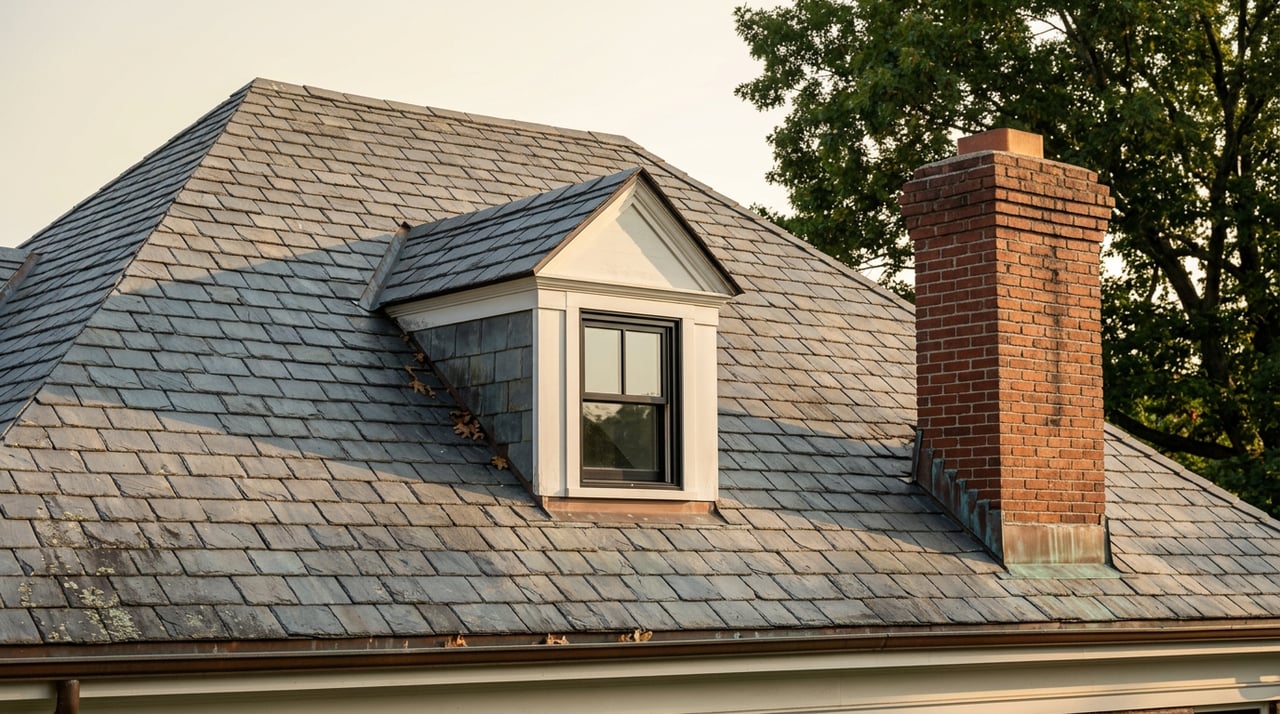
Walk down Thorn Street or Walnut Street in Sewickley Borough and the rooflines tell two different stories. Some homes still wear the slate or tile they were built with more than a century ago. Others, just as old and just as visible from the sidewalk, have gone to asphalt shingle at some point in the last few decades. Both are fully legal. Neither one required a hearing in front of the Historic Review Commission.
That gap isn't sloppy enforcement. It's built into how the ordinance actually works, and it's the one fact about owning in one of Sewickley's three historic districts that most sellers and buyers never hear until it surfaces mid-transaction, whether that's during an inspection, a repair-credit negotiation, or a renovation timeline that runs weeks longer than the closing date allows.
Sewickley Borough has three locally designated historic districts, and any exterior work inside them has to be reviewed by the Historic Review Commission before the Borough will issue a building permit. The process is specific: a complete application, along with a $50 filing fee, has to reach the Borough Manager's office at 601 Thorn Street at least ten days before the HRC's monthly meeting. The commission itself is five volunteers with backgrounds in design, real estate, and preservation, and questions about where an application stands go to Joe Motznik in the Borough Manager's office.
From there, the process moves in stages:
If the HRC doesn't act within 45 days, the application is treated as recommended for approval by default. If Council doesn't act within 45 days of that recommendation, it's treated as approved too. The ordinance builds in a backstop against indefinite delay, but 45 days is still 45 days, and that's before a project even reaches a contractor's schedule.
The commission's own meeting records show what this looks like in practice. In one 2021 session, commissioners reviewed a window replacement and resize at 227 Walnut Street, weighing whether a proposed casement window would preserve the look of the home's original double-hung windows before recommending approval. In the same period, they walked through an addition, pool, and garage application, with one commissioner recusing herself because she was the project's designer. This is a working body making real, house-by-house judgment calls, not a rubber stamp.
Here's the part that doesn't show up in most descriptions of how Sewickley's historic districts work. The Certificate of Appropriateness requirement is tied to the building permit, not to the work itself. If a piece of exterior work doesn't legally require a building permit, it doesn't require HRC review either, by default.
Roof replacement is the biggest item that regularly falls into that gap. Pennsylvania's historic preservation program, which oversees Sewickley's status as a Certified Local Government, has pointed to this exact issue: because roof replacement often doesn't trigger a permit, it also doesn't trigger a Certificate of Appropriateness, and over time that's meant historic slate and tile roofs across the district have been swapped for asphalt shingle simply because it's the path that doesn't require anyone's sign-off. Sewickley is one of only seven Certified Local Governments in western Pennsylvania and one of 48 statewide, a designation that comes with state oversight of exactly this kind of gap between ordinance text and what happens on actual buildings.
None of this makes an asphalt roof on a historic Sewickley home a violation. It makes it the predictable outcome of a rule that regulates windows, additions, siding, and fences more tightly than it regulates the roof. The ordinance itself states its purpose is to preserve and restore the harmonious outward appearance of structures in the district, and for most exterior elements that's exactly how it works. The roof is the exception, and it's been the exception long enough to already show up on plenty of listings.
The reason this loophole gets used isn't mysterious. It's priced into the two options.
A standard asphalt shingle roof replacement in the Pittsburgh region typically runs from around $4,000 up past $8,000, depending on size and materials. A slate roof replacement runs from roughly $11,000 to $24,000, reflecting both the material cost and the specialized labor slate requires, though it's also the material known to last close to a century when properly maintained.
For an owner facing a failing roof on a home that doesn't legally require a permit for that work, the math is straightforward: asphalt is faster, cheaper, and doesn't require a trip in front of the HRC. That's the incentive structure that's shaped the district's rooflines over the decades, not a change in taste or a relaxed attitude toward preservation.
It also means Sewickley's older housing stock, particularly inside the historic district and in neighboring Edgeworth, still carries a real mix of slate, standing seam metal, and asphalt, sometimes on the same block, sometimes on the same house where a low-slope porch roof ties into a steeper main roof of a different material. That mix matters for more than curb appeal. Roofing contractors who work regularly in the area note that insurance adjusters don't always price storm damage on slate, copper, or metal the same way they price a standard asphalt claim, which is a detail worth knowing before a storm event turns into a documentation dispute with an insurer.
If you're preparing to list a historic Sewickley home with an asphalt roof, you're not disclosing a violation. You're disclosing a legal repair that a prior owner made under a rule that never required them to ask permission. Framing it that way, honestly and without apology, tends to land better with buyers than treating it as something to explain away.
If you're the one considering an offer on a historic-district home, a few things are worth confirming before you write a renovation contingency into the deal:
That timeline estimate is worth taking seriously if your offer includes any exterior scope beyond routine maintenance. A kitchen remodel that stays entirely inside the walls won't touch this process. A new addition, replacement windows, or a change to siding will.
This gap isn't necessarily permanent. In March 2026, Sewickley Borough issued a request for proposals seeking a consulting firm to prepare a formal Design Guidelines and Preservation Manual for its three historic districts. The RFP points to the design guides used in the Beaver Historic District and by Mt. Lebanon as models for the level of detail the Borough wants, and it sets a target of 12 to 18 months from the start of work to a finished manual, meaning a completed document likely won't exist before sometime in 2027 at the earliest.
The Borough's own preservation partners have already flagged the roof-permit gap as one of the ambiguities a manual like this could close. That doesn't mean the rule will change before your closing date. It means the flexibility described in this piece is a description of how the ordinance works today, in September 2026, not a permanent feature of owning property in a Sewickley historic district. Anyone budgeting a renovation years out, rather than months, should factor in that the rulebook itself is currently being rewritten.
Does every exterior repair on a historic-district home need a Certificate of Appropriateness? No. Only work that requires a building permit triggers the review. Roof replacement is the most common example of work that often falls outside that requirement, though every project should be confirmed with the Borough Manager's office rather than assumed.
How do I find out if a specific address is inside one of the three historic districts? The Borough Manager's office can confirm district boundaries for a specific address, and the applicable ordinance language is available through the Borough's published code of ordinances.
What happens if exterior work that did require a Certificate of Appropriateness gets done without one? The ordinance requires the certificate before a building permit is issued, which means work requiring a permit that skips this step is out of compliance with the process, separate from whether the finished result would have been approved.
Buying or selling a historic home in Sewickley means dealing with real rules, real timelines, and a few gaps that don't show up until you're the one filling out the application or reading the inspection report. If you're weighing a move in Sewickley's historic core, or trying to figure out what a specific property's roofline and renovation history mean for your offer, Jennifer Mance can walk through the details with you before you're locked into a timeline you didn't plan for. Reach out for a free consultation or a home valuation to start that conversation.
Stay up to date on the latest real estate trends.
Jennifer Mance is dedicated to helping you find your dream home and assisting with any selling needs you may have. Contact Jennifer today for a free consultation for buying, selling, renting, or investing in Pittsburgh.